

Your go-to when a customer asks something you can’t answer yet
Use the search box to jump straight to an answer, or the contents to browse. Every figure here comes from Vitech Solar’s own price list, package sheet, warranty documents and brochure.
- In front of a customer? Go to Customer FAQ or Objection handling.
- Need a ballpark from their electric bill? Use the bill calculator.
- Need a price? Go to Packages & prices. Quote SRP only.
- Not sure if you’re allowed to say something? Check Do’s and don’ts. When in doubt, escalate.
Items marked To confirm (net metering) are still being finalised. Don’t promise anything on these until confirmed.
Vitech Solar: powering a practical solar future
Vitech Solar is a Philippine solar energy company providing practical, reliable solar solutions for homes, businesses and other suitable properties. Our approach is to understand each client’s energy needs first, then give clear, practical solutions from planning through to installation.
01 · PV Solar Installations
Installing photovoltaic systems for residential, commercial and other suitable projects.02 · System Configurations
Planning and configuring system components around each project’s requirements and energy needs.03 · Equipment Trading
Supplying solar panels, inverters, batteries and mounting components for renewable-energy projects.Our approach and commitment
Approach: Understanding the need → Planning the solution → Powering the future.
Commitment: Project-based focus · Clear communication · Practical solutions.
The 30-second pitch
Why customers choose us
- Complete, engineered packages. Every package includes mounting, installation equipment, engineering design and commissioning. No surprise add-ons for the essentials.
- Tier 1 equipment. Tongwei Tier 1 bifacial panels and Aurora hybrid inverters.
- Upgrade path built in. Even our Grid-tie packages use a hybrid inverter, so the customer can upgrade to Hybrid later by paying only the difference to the Hybrid package price.
- Documented testing and handover. Every system is tested (polarity, grounding, grid sync, battery, load transfer, monitoring) and handed over with a certificate, single line diagram, test reports, manuals, warranty certificates and a maintenance checklist.
- We are also an equipment trader. We stock a wide catalog (1.2 kW to 60 kW inverters, 5 kWh to 261 kWh storage), so we can configure systems from small homes to industrial sites.
Company facts
| Item | Detail |
|---|---|
| Registered name | Vitechnology Solar Industries (SEC Company Reg. No. 2026090269902-02). Use this name on quotations and contracts; “Vitech Solar” is the brand name customers see. |
| Office | Unit A, G/F Doña Fabiola Building, Ninoy Aquino Avenue, Brgy. San Dionisio, Parañaque City, Metro Manila 1709 |
| Markets | Residential, commercial and industrial. Commercial/industrial systems from 100 kW+ are custom-engineered. |
| Service area | NCR & CALABARZON |
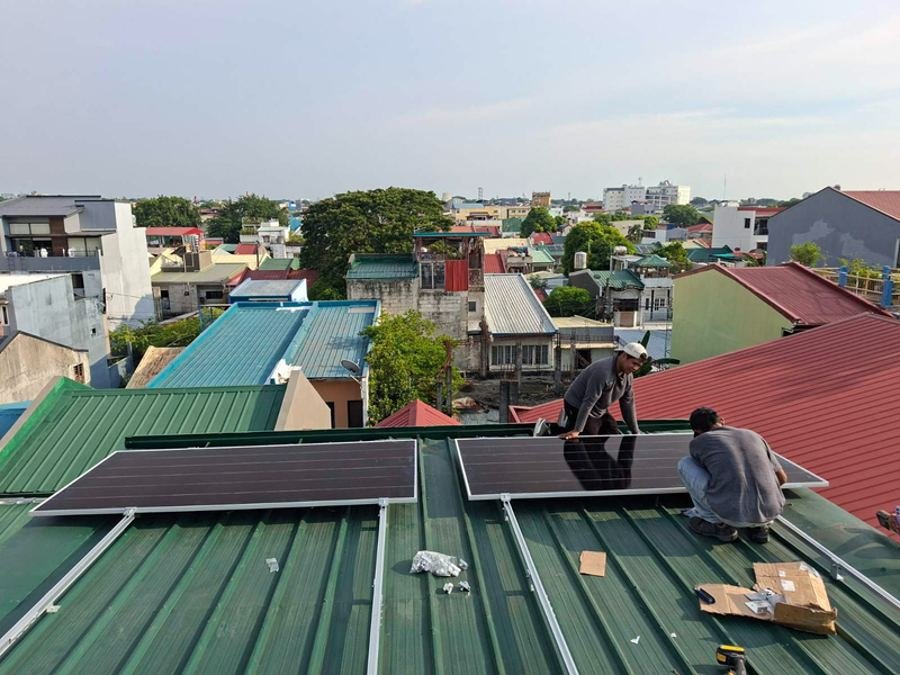
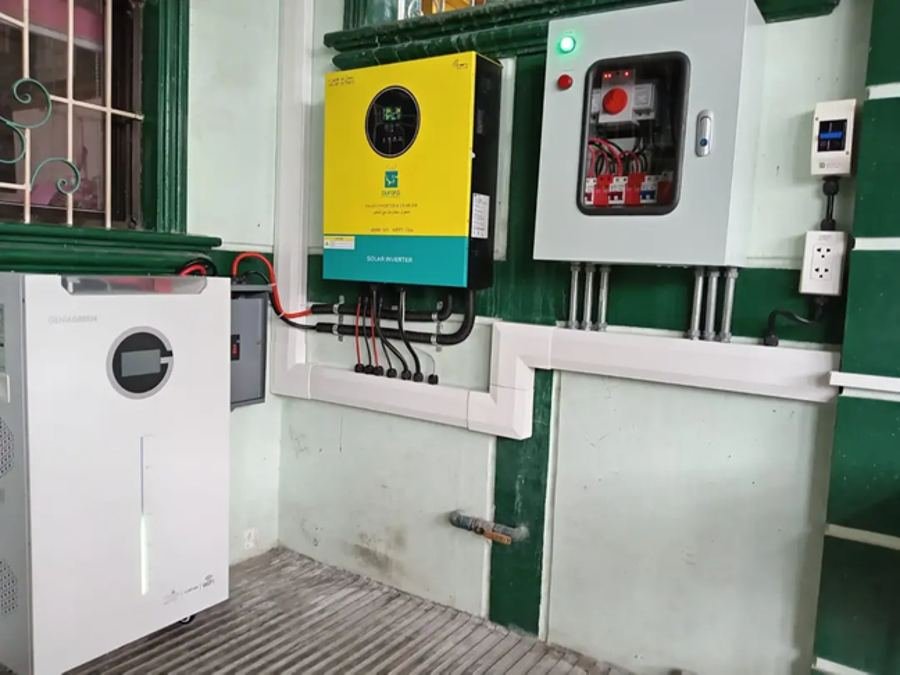
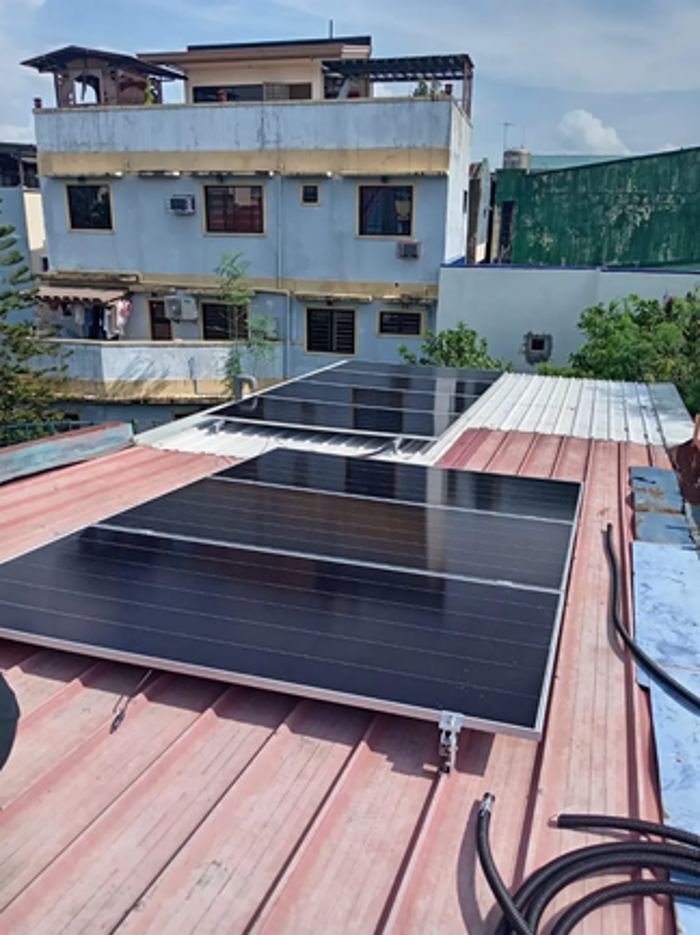
Recent Vitech Solar projects. Use real project photos (with the client’s permission) when presenting.
Retail packages: two lines, five sizes
Every package is available in two versions. Hybrid = solar + battery backup. Grid-tie = solar only, no battery. Prices are fixed package prices (SRP) in Philippine pesos, as of November 2026.
Panels: Tongwei Tier 1 bifacial. Inverters: Aurora hybrid. Batteries: Aurora LiFePO4, 51.2 V. Fixed package prices, SRP in PHP, as of November 2026.
Every package includes
- Solar panels, inverter (and battery for Hybrid)
- Mounting & installation equipment
- Engineering design & commissioning
- Safety devices: DC isolator, fuses, surge protection, breakers
- Wi-Fi monitoring setup, client orientation and handover documents
Useful talking point: the battery difference
Every Hybrid package includes the 16 kWh Aurora battery (314 Ah). A Grid-tie customer can upgrade to Hybrid later by paying the difference to the Hybrid package price:
- 6, 8, 10 kW: + ₱65,000
- 12, 16 kW: + ₱81,000
- Battery only (no package): 16 kWh Aurora battery, ₱145,000
Prices are fixed
The package price is the price. There are no discounts. Anything outside the standard package is quoted separately, for example extra panels (see the sizing table), a second battery, a ground-mount structure or a three-phase system. The site survey still checks that the roof and electrical setup suit the package before installation.
Payment terms
| Stage | Payment | Example: 6 kW Hybrid (₱379,000) |
|---|---|---|
| Downpayment, to confirm the order | 50% | ₱189,500 |
| Upon delivery of equipment | 40% | ₱151,600 |
| Before turnover (handover) | 10% | ₱37,900 |
Commercial & industrial
Systems of 100 kW and above are custom-engineered, sized to the client’s load, roof or land area and grid requirements. We carry three-phase hybrid inverters up to 60 kW (parallelable) and commercial energy storage from 112 kWh up to 261 kWh. Collect 12 months of bills plus the load profile and pass the lead to management for a custom proposal.
Bill calculator: from electric bill to package
Type the customer’s monthly bill below for an instant recommendation. Use their actual rate per kWh from the bill when you have it.
How the calculator works
Same method as the Vitech sizing spreadsheet, so you can also do it by hand:
2 · Daily kWh = Monthly kWh ÷ 30
3 · System size (kW) = Daily kWh ÷ Sun hours (4) × Loss factor (1.5)
4 · Panels needed = System size (W) ÷ Panel wattage (660 W or 720 W), rounded up
Worked example
| Step | Calculation | Result |
|---|---|---|
| Bill and rate | ₱7,300 bill at ₱15.06/kWh | — |
| Monthly use | 7,300 ÷ 15.06 | ≈ 485 kWh |
| Daily use | 485 ÷ 30 | ≈ 16.2 kWh |
| System size | 16.2 ÷ 4 × 1.5 | ≈ 6.06 kW |
| Recommend | Just above 6 kW, so the 6 kW package with extra panels, or step up to 8 kW | 6–8 kW |
Quick guide: monthly bill → package
Based on ₱15.06/kWh (Meralco residential rate, October 2026), 4 sun hours per day and a 1.5 loss factor. If the customer’s rate is very different, use the formula above instead.
| Monthly bill (₱) | Inverter | Panels | Note |
|---|---|---|---|
| Up to 7,228 | 6 kW | 10 × 660 W | Standard package |
| 7,229 – 7,584 | 6 kW | 14 × 660 W | Extra panels, custom quote |
| 7,585 – 9,638 | 8 kW | 14 × 660 W | Standard package |
| 9,639 – 9,993 | 8 kW | 16 × 660 W | Extra panels, custom quote |
| 9,994 – 12,048 | 10 kW | 14 × 720 W | Standard package |
| 12,049 – 12,403 | 10 kW | 18 × 720 W | Extra panels, custom quote |
| 12,404 – 14,457 | 12 kW | 18 × 720 W | Standard package |
| 14,458 – 14,813 | 12 kW | 20 × 720 W | Extra panels, custom quote |
| 14,814 – 19,276 | 16 kW | 24 × 720 W | Standard package |
| 19,277 – 19,632 | 16 kW | 26 × 720 W | Extra panels, custom quote |
| Above 19,632 | Custom | — | Escalate for a custom design |
How to talk about savings without over-promising
Using the same assumptions as the sizing calculator, each 1 kW of system offsets about 80 kWh per month, worth about ₱1,200 per month at ₱15.06/kWh.
| Package | Est. energy offset / month | Est. value / month | Grid-tie simple payback | Hybrid simple payback |
|---|---|---|---|---|
| 6 kW | ≈ 480 kWh | ≈ ₱7,200 | ≈ 3.6 yrs | ≈ 4.4 yrs |
| 8 kW | ≈ 640 kWh | ≈ ₱9,600 | ≈ 3.5 yrs | ≈ 4.0 yrs |
| 10 kW | ≈ 800 kWh | ≈ ₱12,000 | ≈ 3.2 yrs | ≈ 3.7 yrs |
| 12 kW | ≈ 960 kWh | ≈ ₱14,500 | ≈ 3.1 yrs | ≈ 3.6 yrs |
| 16 kW | ≈ 1,280 kWh | ≈ ₱19,300 | ≈ 3.0 yrs | ≈ 3.3 yrs |
- Excess daytime solar is exported to the grid. Under net metering, exports are credited at a much lower rate than the retail price (see Net metering).
- Most usage is at night and there is no battery.
- Weather, shading, dust or roof orientation reduce output.
- Electricity rates go down (they also change every month).
From first call to handover
Each step shows what to do with the customer and, in green, what to do in the Vitech system. Payments follow the 50 / 40 / 10 schedule. Always ask for a screenshot or receipt of each payment if available.
- Start your dayIn the systemLog in at vitechsolar.com/login with your company email. Check your Home Dashboard for the leads you need to attend to today.
- Open the lead & make first contactRespond fast. Introduce Vitech, ask for a photo of the latest electric bill, and book a call or visit.In the systemGo to Leads and click the lead. If the lead isn’t in the system yet, create a new one with their details. Then click Open Project.
- Discovery & qualificationAsk the discovery questions. Confirm they own the property (or have the owner’s consent), who decides, and the budget range.In the systemOnce the lead is qualified, click Qualified.
- Quick sizingUse the bill calculator to suggest a package and its price. Explain Hybrid vs Grid-tie.
- Send the quotesWalk the customer through every line item, and the payment terms.In the systemCreate the quote and send both quotes to the client: Hybrid and Grid-tie. Quotes carry a reference number (format: VT-SOLAR-00000).Send the quotation PDF with this message. Use the Copy quote message button in the bill calculator to fill in the customer’s numbers automatically:
Your quotation is ready! ☀️ The full details are in the attached PDF. Based on your monthly bill of ₱[bill], we estimate your system can cover a large part of your electricity use, so it can pay for itself in about: • Hybrid: [X] years • Grid-tie: [X] years After that, the savings are yours to enjoy for many years. 🌞 These are estimates based on your current bill. Actual savings may vary with your usage and the weather. If you’d like to proceed, just reply “PROCEED HYBRID” or “PROCEED GRID-TIE” and we’ll send you the next steps.
- Close: 50% downpaymentAsk for the 50% downpayment, with a screenshot or receipt if available.
- Payment confirmation & schedulingWait for Finance to confirm the payment and for the Site Installer to schedule the installation. Pass on all your notes to the technical team: customer priorities, night-time loads, access instructions, roof concerns.
- Free site survey & load assessmentThe site survey is free and usually happens after the downpayment is confirmed. The technical team checks the roof type and condition, shading, structure, main panel, cable routes, and single- or three-phase supply, then produces the design and single line diagram (SLD). If a customer wants a roof assessment before paying the downpayment, it can be considered: check with management first.
- ContractIn the systemGenerate the contract (under Vitechnology Solar Industries) and print it.Remind the Site Installer to have the client sign it once delivery is complete.
- Delivery: 40% paymentAsk for the 40% delivery payment, with a screenshot or receipt if available.
- Installation, testing & commissioningInstallation takes 3–5 days: panel and mounting installation, DC/AC protection, PV/battery/AC cabling, inverter and battery installation, earthing and lightning protection, labelling, monitoring setup. Then testing: PV voltage and polarity, grounding, AC output, grid synchronisation, battery charge/discharge, load transfer and utility recovery, monitoring. Wait for the Site Installer to finish the installation and hand over all documents.
- Final 10% paymentAsk for the remaining 10% before turnover, with a screenshot or receipt if available.
- Turnover & handoverHandover Completion Certificate, warranty certificate and documents signed. Client orientation and training on the system and monitoring app. Warranty starts on this date.
- Net metering (if applicable)Application with the utility for a bi-directional meter. Confirm who files and who pays fees
- Thank you, follow-up & referralsThank the client for choosing Vitech Solar. Check in after their first electric bill. A happy customer is the best source of new leads, so ask for referrals and permission to use project photos.
What to ask, and what to collect
Ask
- How much is your monthly electric bill, and is it higher in summer?
- Do you use more power during the day or at night? How many aircon units?
- How often do you experience brownouts, and how long do they last?
- What matters most: lowering the bill, backup during brownouts, or both?
- Are you planning to add loads soon (aircon, EV, extension, business equipment)?
- Do you own the property? How long do you plan to stay?
- What type of roof do you have, and how old is it?
- Who else is part of the decision?
- Have you received other quotes? What did they include?
- When would you like the system running?
Collect
- Latest electric bills (3–12 months if possible)
- Photos of the roof from different angles, and of nearby trees or buildings that cast shade
- Photo of the main electrical panel / breaker box
- Single-phase or three-phase supply
- Exact address and pin location
- Best contact numbers and decision-maker names
Common objections and how to answer them
Listen fully, acknowledge the concern, answer with facts, then ask a question to move forward. Each objection has the reasoning first, then a sample script. Scripts are written in polite English and speak as “we”, for Vitech Solar. Use the customer’s name when you can, stay warm and patient, and always use the customer’s own numbers from the bill calculator.
| They say | How to handle it, and what to say |
|---|---|
| “It’s too expensive.” | Compare it to what they already pay. A ₱7,300/month bill is about ₱87,600 a year to the utility. A 6 kW Grid-tie package (₱314,000) is estimated to pay for itself in about 3.5 years, and the panels carry a 25-year performance warranty. Ask: “Would it help to compare the monthly savings to what you pay now?” Say it like this“We understand, it is a big amount. Right now, about ₱88,000 a year goes to your electric bill. With solar, that same money goes toward a system that you own. Based on your bill, we estimate the system will pay for itself in about 3 to 4 years, and after that, the savings are yours for many years to come. Would you like us to show you the computation for your home?” |
| “I got a cheaper quote.” | Compare like for like: panel brand and Tier 1 status, panel wattage, inverter brand and size, battery kWh, and whether engineering design, protection devices, earthing and lightning protection, testing, monitoring setup and workmanship warranty are included. Ours include all of these. Our prices are fixed and we don’t discount. Never criticise the competitor; just help the customer compare. Say it like this“That’s a good idea. It’s always best to compare. If you don’t mind, may we see their quote so we can compare it together? Prices can differ depending on the panel brand and wattage, the inverter, and whether engineering design, protection devices, testing and warranties are included. Our packages include all of these, so you will know exactly what you are getting.” |
| “I’ll wait until prices drop or technology improves.” | Every month of waiting is another full electric bill, and rates change every month. Today’s panels already carry 25-year performance warranties. Our Grid-tie packages use a hybrid inverter, so they can start with solar now and add a battery later. Say it like this“We understand. It makes sense to look for the right timing. Just to share, the electric bill continues every month while waiting. The panels we install today come with a 25-year performance warranty, so they will serve you for a long time. If the battery is your concern, you may start with Grid-tie first and upgrade to Hybrid later. The system is already prepared for it.” |
| “Do I really need a battery?” | A battery stores the unused solar power the panels produce during the day, so the home can use it at night and during brownouts. Without a battery, a Grid-tie system shuts down during a brownout for safety, and unused solar power is not stored. If brownouts are rare and most use is daytime, Grid-tie is a good start, and the customer can upgrade to Hybrid later. Say it like this“Good question. May we ask how often you experience brownouts in your area, and how much electricity you use at night? A battery stores the unused solar power your panels produce during the day, so you can use it at night or during a brownout. Without a battery, the system turns off during a brownout for safety. If brownouts are rare and you use most of your power during the day, Grid-tie is a good place to start, and you can upgrade to Hybrid anytime.” |
| “Will it damage or leak through my roof?” | We use mounting matched to the roof type: tile hooks, Kliplok and standing-seam clamps, rails, L-feet and hanger bolts. The site survey checks the roof condition first, and workmanship is covered for 12 months after turnover. Say it like this“That’s a very valid concern. Before installation, our technical team will check your roof’s type and condition. We use mounting designed for your specific roof, whether tile, Kliplok or corrugated. Our workmanship is also covered for 12 months after turnover, so if any issue comes from our installation, we will take care of it.” |
| “What about typhoons?” | The mounting structure is engineered and installed for the roof. Be honest: natural disasters and force majeure are not covered by the equipment warranty, so suggest the customer include the system in their property insurance. Say it like this“Thank you for asking. That’s an important point here in the Philippines. The mounting structure is engineered and installed for your roof. We would also like to be transparent with you: natural disasters are not covered by equipment warranties, for any brand. For added peace of mind, we recommend including the system in your home insurance.” |
| “Solar doesn’t work when it’s cloudy or rainy.” | Panels still produce, just less. Our sizing already assumes only 4 average sun hours per day plus a 1.5 loss factor, and bifacial panels also capture reflected light from the back. Say it like this“Solar panels still produce power on cloudy and rainy days, just less than on sunny days. We already include this in our computation. We only assume about 4 hours of good sunlight per day, to account for the weather throughout the year. Our panels are also bifacial, so they collect light from both sides.” |
| “How long have you been in business?” | Be honest and confident. Talk about the team’s experience, our office in Parañaque, SEC registration, Tier 1 equipment with manufacturer warranties, and our documented testing and handover process. Offer to show recent project photos. Say it like this“Thank you for asking. Vitech Solar is a newly registered company, and our team brings X years of experience in solar and electrical work. We use Tier 1 equipment with full manufacturer warranties, and every system is tested and turned over with complete documents. You are welcome to visit our office in Parañaque, and we would be happy to show you photos of our recent projects.” |
| “What if I sell the house?” | Under the 2025 amended net metering rules, unused export credits can be transferred when the property changes ownership. The system stays with the house as an upgrade for the buyer. Say it like this“That’s a good point to consider. The system stays with the house, so it becomes an added feature for the next owner. If you are on net metering, the current rules also allow unused credits to be transferred when the property changes ownership.” |
| “I need to think about it / ask my spouse.” | Respect it. Offer to present to both decision-makers together, leave the quotation, and agree a specific follow-up date and time. Say it like this“Of course. It’s an important decision, and it’s best that everyone in the family is comfortable with it. If it would help, we would be glad to explain it to both of you together, through a quick call or a visit. What day and time would be most convenient for you?” |
| “Maintenance sounds like a hassle.” | Very little is needed: keep panels clean, check the monitoring app, and follow the maintenance checklist we hand over. Battery and inverter run automatically. Say it like this“Good news. The system needs very little maintenance. Simply keep the panels clean and check the monitoring app on your phone from time to time. The inverter and battery run automatically. We will also give you a simple maintenance checklist during turnover.” |
| “Can I pay in installments?” / “Can you give a discount?” | Prices are fixed, with no discounts. Explain the schedule: 50% downpayment to confirm the order, 40% on equipment delivery and 10% before turnover, so payment is spread across the project. Don’t promise any other arrangement. Say it like this“Thank you for asking. Our package prices are fixed, so every client receives the same price. To make it easier, payment is divided into three parts: 50% to confirm your order, 40% upon delivery of the equipment, and the remaining 10% once your system is installed, before turnover.” |
Explain it simply
Grid-tie
Solar panels + inverter, connected to the utility grid. Solar powers the home during the day; the grid supplies the rest. Shuts down during brownouts for safety. Lowest cost.Hybrid
Solar + inverter + battery, still connected to the grid. Stores solar energy for the night and keeps loads running during brownouts. Best for areas with frequent outages.Off-grid / all-in-one
Not connected to the grid at all. For remote sites, farms or small cabins. Our Echo all-in-one generators (1–16 kWh) suit small or portable needs.kW vs kWh: the one customers mix up most
kW is size or power: how big the system is, or how much power an appliance draws. kWh is energy over time: what the electric bill charges for and what a battery stores. Analogy: kW is the size of the water pipe; kWh is how much water fills the tank.
How the system works, in one breath
Panels turn sunlight into DC electricity → the inverter converts it to AC power the home uses → the home uses solar first → extra solar charges the battery (Hybrid) or goes to the grid (with net metering) → at night or when solar isn’t enough, the battery or grid fills the gap.
What we install and what we trade
Solar panels
Our packages use Tongwei Tier 1 bifacial panels (660 W and 720 W). “Tier 1” is a classification for large, financially stable panel manufacturers. We also supply other panel technologies:
| Type | In plain language |
|---|---|
| Mono | Monocrystalline silicon cells. Efficient, uniform look, good when roof space is limited. |
| TOPCon | Advanced cell technology with high efficiency, good performance in heat and low light, and low degradation over time. |
| N-Type | N-type silicon cells: high efficiency, better temperature performance, stable long-term output. |
| Bifacial | Produces power from both front and back, capturing light reflected from the roof or ground for extra yield. What our packages use. |
Inverters
Packages use Aurora hybrid inverters. Our trading catalog runs from 1.2 kW to 60 kW:
- Transformer-based (1.2–10 kW): robust, generator auto-start; good for off-grid and backup.
- High-frequency (1.6–11 kW): compact, lithium battery communication, Wi-Fi.
- Low-voltage hybrid, single- and three-phase (6.6–24 kW): UPS switching under 10 ms, parallel operation, IP66 options.
- High-voltage three-phase hybrid (40, 50, 60 kW): for commercial sites; up to 6 units in parallel.
Batteries (LiFePO4)
All our batteries are lithium iron phosphate (LiFePO4), a safe, long-life chemistry, with a smart battery management system (BMS) and a rated cycle life of ≥ 8,000 cycles.
| Range | Capacities | Typical use |
|---|---|---|
| Home | 5.12, 5.88, 8, 10.5, 15, 16, 21.5, 30 kWh | Residential Hybrid systems (all packages use the 16 kWh) |
| HV rack | 81.9–175.5 kWh and 144–224 kWh systems | Large homes, small commercial |
| Commercial ESS | 112.53, 241.15, 261 kWh | Commercial and industrial, with fire suppression and smart cooling |
| Battery packs | 2.56–4 kWh (12.8 V / 25.6 V) | Small off-grid and backup setups |
Battery only: the 16 kWh Aurora battery (51.2 V, 314 Ah) sold on its own is ₱145,000.
Call our batteries Aurora when talking to customers. Model codes (YF-LFP…) are for technical reference only.
All-in-one solar generators (Echo series)
Battery, inverter and BMS in one unit: Echo-1 (1 kWh, 500 W), Echo-2 (2 kWh, 1,000 W), Echo-3 (3 kWh, 1,500 VA), Echo-4 (4 kWh, 2,000 VA), Echo-8 (8 kWh, 4,000 VA), Echo-16 (16 kWh, 10,000 VA). Good for small homes, stores, cabins and portable backup.
Mounting & accessories: which roof, which hardware
| Roof / site | Hardware |
|---|---|
| Tile roofs | Fixing, single-tile and adjustable tile roof hooks |
| Metal roofs: Kliplok, standing seam | Universal clamp series (Kliplok, standing-seam and Lysaght-profile roof clamps), no roof penetration needed for many profiles |
| Metal roofs: corrugated / trim-dek | Single hooks (trim-dek), hanger bolts, L-feet |
| Ground-mounted | Ground screws, rails and cable trays |
| All systems | Guide rails and rail connectors, middle and end clamps, screws, grounding clips and lugs, cable clips |
Net metering in the Philippines: what reps need to know
Net metering lets a customer export unused solar power to the utility (e.g. Meralco) and receive credits on their bill. The customer needs a bi-directional meter installed by the utility.
- Who qualifies: customers with renewable-energy systems up to 100 kW, under the Renewable Energy Act (RA 9513) and ERC net metering rules.
- Exports are not credited at the full retail rate. The credit is based on the utility’s generation rate, which is much lower than the ~₱15/kWh retail rate. This is the most common customer misunderstanding. Don’t promise one-for-one credits.
- 2025 amended rules (ERC Resolution No. 15, s. 2025): unused credits can be banked and rolled over, credits can be transferred when the property changes ownership, and utilities must publish their net metering details.
- Meter cost: the ERC capped bi-directional meter costs at ₱3,000 (September 2025 order).
- Processing time: since April 2026, during the national energy emergency, the DOE has directed utilities to finish net metering applications within 10 working days and LGUs to act on permits within 3 working days.
- More changes are coming: in July 2026 the ERC proposed a further overhaul of the net metering rules. Check for updates before quoting timelines.
Sources (checked November 2026): Power Philippines: ERC eases net-metering rules · Power Philippines: meter cost cap · Power Philippines: ERC proposed overhaul, July 2026 · Net metering application guide 2026 · Philstar: Meralco October 2026 rate
Questions customers ask most
Will my system work during a brownout?
Does solar work at night?
Will my electric bill become zero?
Does it work on cloudy or rainy days?
What’s included in the package?
Can I add a battery later?
Can I buy just a battery?
Can I add more panels later?
Is the site survey free?
How long does installation take?
What are the payment terms?
Do you cover my area?
How long will the system last?
What maintenance is needed?
Can I monitor my system?
What is bifacial, and why does it matter?
Is lithium (LiFePO4) safe?
Do you handle net metering and permits?
What if something breaks?
Do you do commercial or factory projects?
What’s covered, for how long, and what the customer receives
| Equipment | Warranty | Expected service life* |
|---|---|---|
| Solar panels | 15-year product warranty against manufacturing defects; 25-year performance warranty | 15–25 years with proper installation and maintenance |
| Hybrid inverter | 5-year product warranty after installation | 5 years or more, depending on conditions and maintenance |
| Aurora battery | 5-year product warranty against manufacturing defects | 5–10 years, depending on depth of discharge, cycles, temperature, maintenance |
| Safety devices | Manufacturer warranty (varies by brand) | — |
| Workmanship | 12 months warranty services upon project turnover | — |
*Expected service life is a general guideline only and is not an extension of the manufacturer’s warranty.
Terms reps must know
- Covers manufacturing defects and failures under normal operating conditions.
- Warranty starts on the date of handover and commissioning.
- Claims need the original warranty certificate and proof of installation.
- Repair or replacement follows each manufacturer’s policies.
Not covered
- Improper operation or misuse
- Unauthorised modification, repair or alteration
- Natural disasters, fire, flood, lightning, force majeure
- Physical damage from accidents or negligence
At handover the customer receives
- Handover Completion Certificate
- Warranty Handover Report and Warranty Certificate
- Product Warranty & Performance Statement
- Single Line Diagram (SLD)
- Commissioning report and test reports
- Equipment manuals
- Manufacturer warranty certificates
- Maintenance checklist
- Client orientation and monitoring app training
Protect the customer, and protect Vitech
Do
- Quote SRP from the current package sheet only
- Say “estimated” whenever you mention savings or payback
- Base every recommendation on the customer’s actual bill
- Explain clearly that Grid-tie shuts off during brownouts
- Explain warranty exclusions honestly, including natural disasters
- Say “Grid-tie”, not “On-Grid”, in all customer communication
- Quote the fixed package price and the 50 / 40 / 10 payment terms
- Escalate technical questions you can’t answer; never guess
Don’t
- Never share the internal pricing/costing sheet, costs, markups or margins with customers or affiliates
- Never promise a zero bill or guaranteed savings
- Never promise net metering approval dates or credit rates
- Never promise installation dates before the technical team confirms
- Never offer a discount or different payment terms; prices are fixed
- Never criticise competitors; compare on facts
- Never overstate company history or project count
Terms in plain language
| Term | Meaning |
|---|---|
| kW / kWp | Size or power of a system. kWp (kilowatt-peak) is the panels’ maximum rated output. |
| kWh | Energy used over time. What the electric bill charges for and what a battery stores. |
| Inverter | Converts DC power from panels and batteries into AC power for the home. |
| Hybrid inverter | Inverter that manages panels, battery and grid together. |
| Grid-tie | Solar system connected to the grid, without battery. |
| Hybrid system | Solar + battery, connected to the grid, with backup during brownouts. |
| Off-grid | System not connected to the utility grid. |
| LiFePO4 | Lithium iron phosphate: a safe, long-life battery chemistry. |
| BMS | Battery management system: electronics that protect and balance the battery. |
| Cycle life | How many full charge/discharge cycles a battery is rated for. |
| Bifacial | Panel that generates power from both sides. |
| Tier 1 | Classification for large, financially stable panel manufacturers. |
| MPPT | Inverter feature that gets the maximum power out of the panels at any moment. |
| Sun hours | Equivalent hours of full sunlight per day. We size with 4. |
| Loss factor | Allowance for heat, wiring, dust and inverter losses. We size with 1.5. |
| Single / three-phase | Type of electrical supply. Most homes are single-phase; many businesses are three-phase. |
| Net metering | Utility program that credits exported solar power on the customer’s bill. |
| Bi-directional meter | Utility meter that measures power both imported and exported. |
| ERC / DOE / DU | Energy Regulatory Commission / Department of Energy / Distribution Utility (e.g. Meralco). |
| SLD | Single Line Diagram: the electrical drawing of the system. |
| SPD | Surge protection device: protects equipment from voltage spikes and lightning surges. |
| DC isolator / MCB / MCCB | Switches and breakers that safely disconnect and protect circuits. |
| Commissioning | Testing and verifying the system before handover. |
| Payback period | Years for estimated savings to equal the system price. |
| SRP | Suggested retail price: the price we quote customers. |
| Kliplok / standing seam / trim-dek | Common metal roof profiles; each uses a different clamp or hook. |
Who to call
| For | Contact |
|---|---|
| Sales line (customers) | 0917-326-2800 · sales@vitechsolar.com · vitechsolar.com · Facebook: Vitech Solar |
| Technical questions, site surveys, installation | Mascot Musico, Technical Lead |
| Price approvals, discounts, custom/commercial projects | Robby Co, Managing Partner · +63 917 832 3404 |
| Office | Unit A, G/F Doña Fabiola Building, Ninoy Aquino Avenue, Brgy. San Dionisio, Parañaque City, Metro Manila 1709 |